What Are My Options When I Need Help With Daily Living?
Direct answer
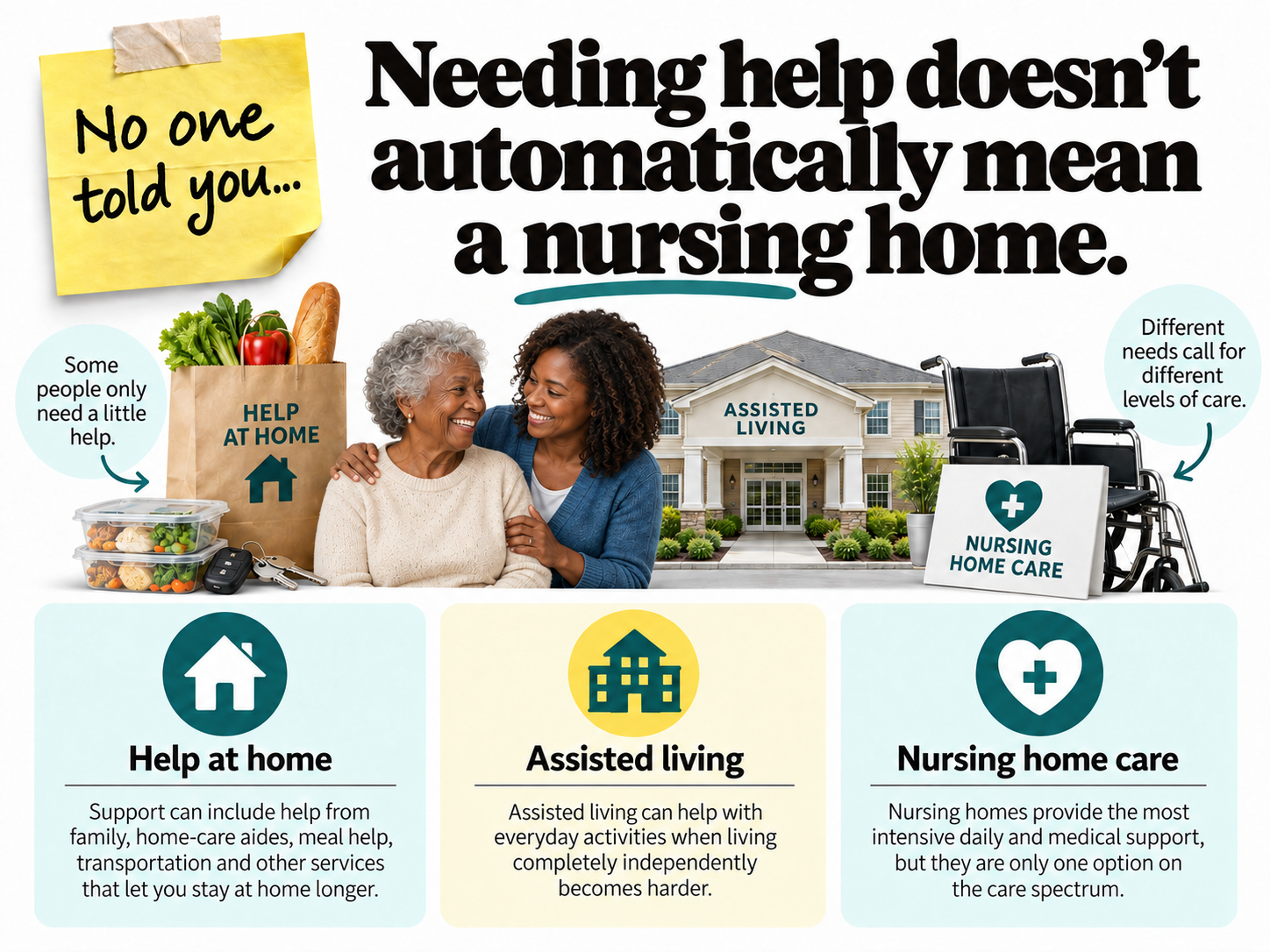
Needing help with everyday life does not automatically mean moving into a nursing home.
Depending on how much help you need, options can include:
help in your own home
adult day programs
assisted living
memory care
or a nursing home
The more supervision and medical care you need, the more intensive the setting usually becomes.
Updated
Start with the real question
Do not start with:
Do I need a nursing home?
Start with:
What do I need help doing?
And:
How often do I need that help?
You may need help with:
- bathing
- dressing
- eating
- using the bathroom
- getting in and out of bed
- taking medications
- preparing meals
- getting to appointments
- staying safe when alone
Option 1: Help in your own home
Help at home can come from:
- family or friends
- paid home-care aides
- homemaker services
- meal delivery
- transportation
- nurses or therapists when medical care is needed
The biggest advantage:
You stay home.
The challenge:
As the number of paid-care hours grows, home care can become expensive.
Option 2: Adult day programs
Adult day programs provide care and supervision during part of the day.
Think:
support during the day, home at night.
Option 3: Assisted living
Assisted living is generally for someone who does not need full nursing-home care but needs more help than they can comfortably get while living completely independently.
Option 4: Memory care
Memory care is designed for people with Alzheimer's disease or other dementia who need more supervision and a safer environment.
Option 5: Nursing home
A nursing home provides the most intensive residential care on this list.
Some people enter a nursing facility temporarily for rehab.
Others live there long term because they need ongoing help that cannot safely be provided in a less intensive setting.
How do I know which level I need?
Ask:
Can I safely be left alone?
Do I mainly need help with everyday activities?
Do I need regular skilled nursing or medical care?
Is dementia affecting safety?
Who pays?
People may use combinations of:
- income
- savings
- long-term-care insurance
- family help
- Medicaid if eligible
- certain veterans or state programs if eligible
Medicare generally does not pay for long-term non-medical help with everyday living.
Where do I start if I need help now?
The federal Eldercare Locator connects older adults and families with local services.
800-677-1116
The bottom line
Think of help as a ladder:
Help at home
Adult day support
Assisted living
Memory care when needed
Nursing home when 24-hour care is needed
The right choice depends on what help you need, how often you need it, whether you can safely be alone and what you can afford.