Does Medicare Pay for a Nursing Home?
Direct answer
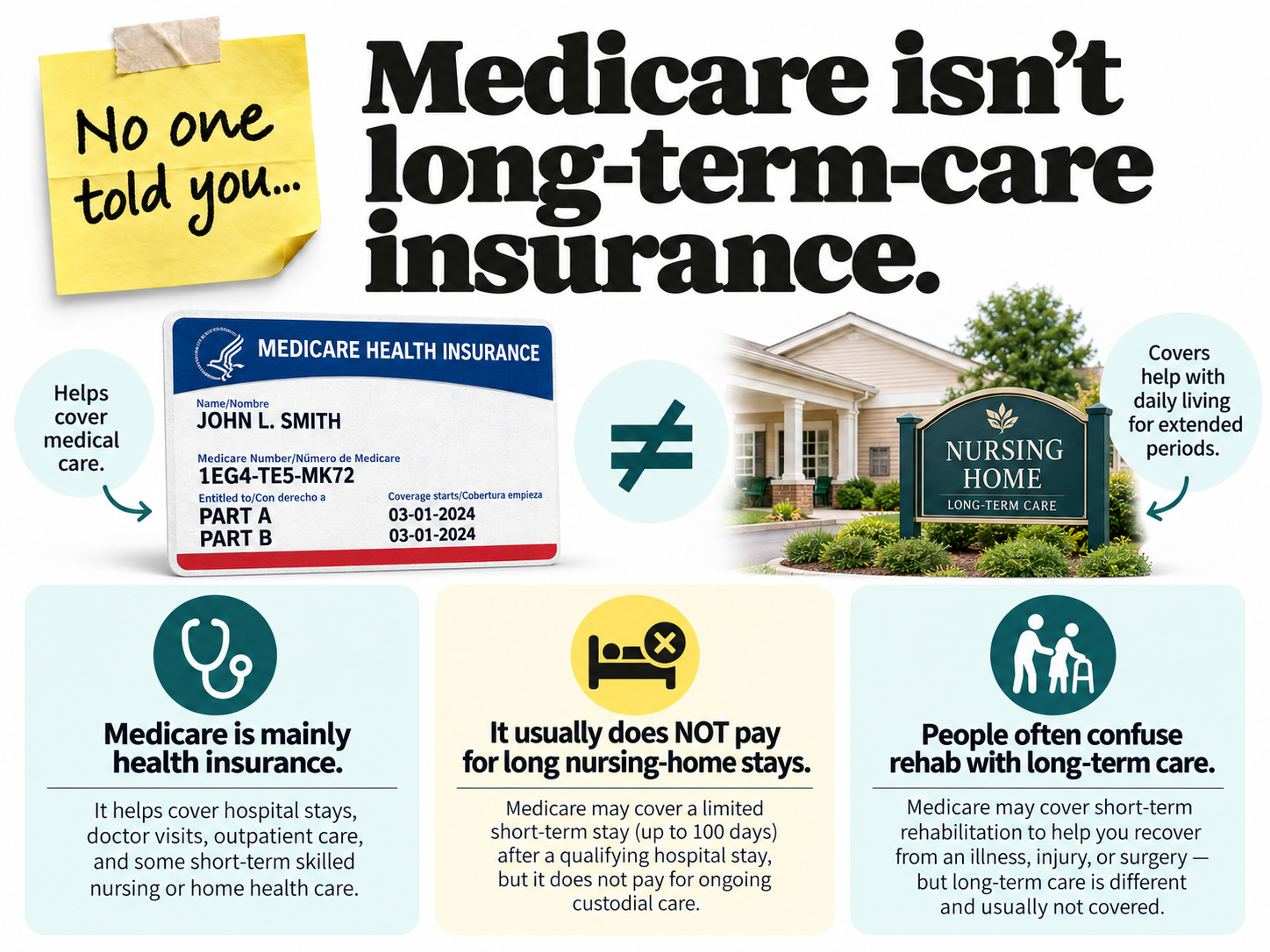
Medicare can pay for certain short-term skilled nursing and rehabilitation after an illness or injury when you meet its rules. Medicare generally does not pay for long-term nursing-home living when what you need is ongoing help with everyday activities like bathing, dressing, eating or getting around.
Updated
The short version
This is one of the biggest Medicare misunderstandings.
Someone goes from the hospital to a nursing or rehabilitation facility.
Medicare pays.
Later, the family assumes:
“Great. Medicare will pay if Mom ever needs to live in a nursing home.”
Not necessarily.
Those can be two completely different kinds of care.
Short-term rehab is different from living in a nursing home
Imagine you have a stroke.
You leave the hospital but still need:
- physical therapy
- skilled nursing
- rehabilitation
- medical monitoring
You temporarily go to a skilled nursing or rehabilitation facility.
Medicare can pay for qualifying short-term skilled care when you meet the rules.
That is rehab after a medical problem.
Long-term nursing-home living is different
Now imagine you have recovered as much as you are likely to recover.
You no longer need daily physical therapy or skilled medical treatment.
But you cannot safely live on your own.
You need ongoing help:
- bathing
- dressing
- eating
- using the bathroom
- getting in and out of bed
- moving around safely
You may need to live in a nursing home for months or years because you need that everyday help.
Medicare generally does not pay for that long-term nursing-home living.
Same building. Different reason for being there.
This is the part that clears up a lot of confusion.
You could spend three weeks in a facility getting skilled rehabilitation after surgery and Medicare may help pay.
Another person could live in that same facility for two years because they need ongoing help with daily life and Medicare generally will not pay for that long-term stay.
The building is not what determines the coverage.
The type of care is.
What people get wrong
“My mother went to a nursing facility after surgery and Medicare paid, so Medicare will pay if she eventually has to live in a nursing home.”
Not necessarily.
The first stay may have been short-term skilled rehabilitation.
Living there long-term because she needs everyday help is a different kind of care.
What if I need help but do not need a nursing home yet?
That is a separate question.
There are several levels of help between “completely independent” and “living in a nursing home.”
We explain those options separately in:
What Are My Options When I Need Help With Daily Living?
The bottom line
The easiest way to remember it:
Short-term skilled rehab after a medical problem: Medicare may pay.
Long-term nursing-home living because you need everyday help: Medicare generally does not.