No One Told Me There Are Four Parts to Medicare
Direct answer
Medicare has four parts, and each does a different job.
Part A = hospital and inpatient care
Part B = doctors and outpatient medical care
Part C = Medicare Advantage
Part D = prescription drugs
The confusing part is that Part C is not simply another benefit you stack on top.
It is a different way to receive your Part A and Part B coverage through a private Medicare-approved plan.
Updated
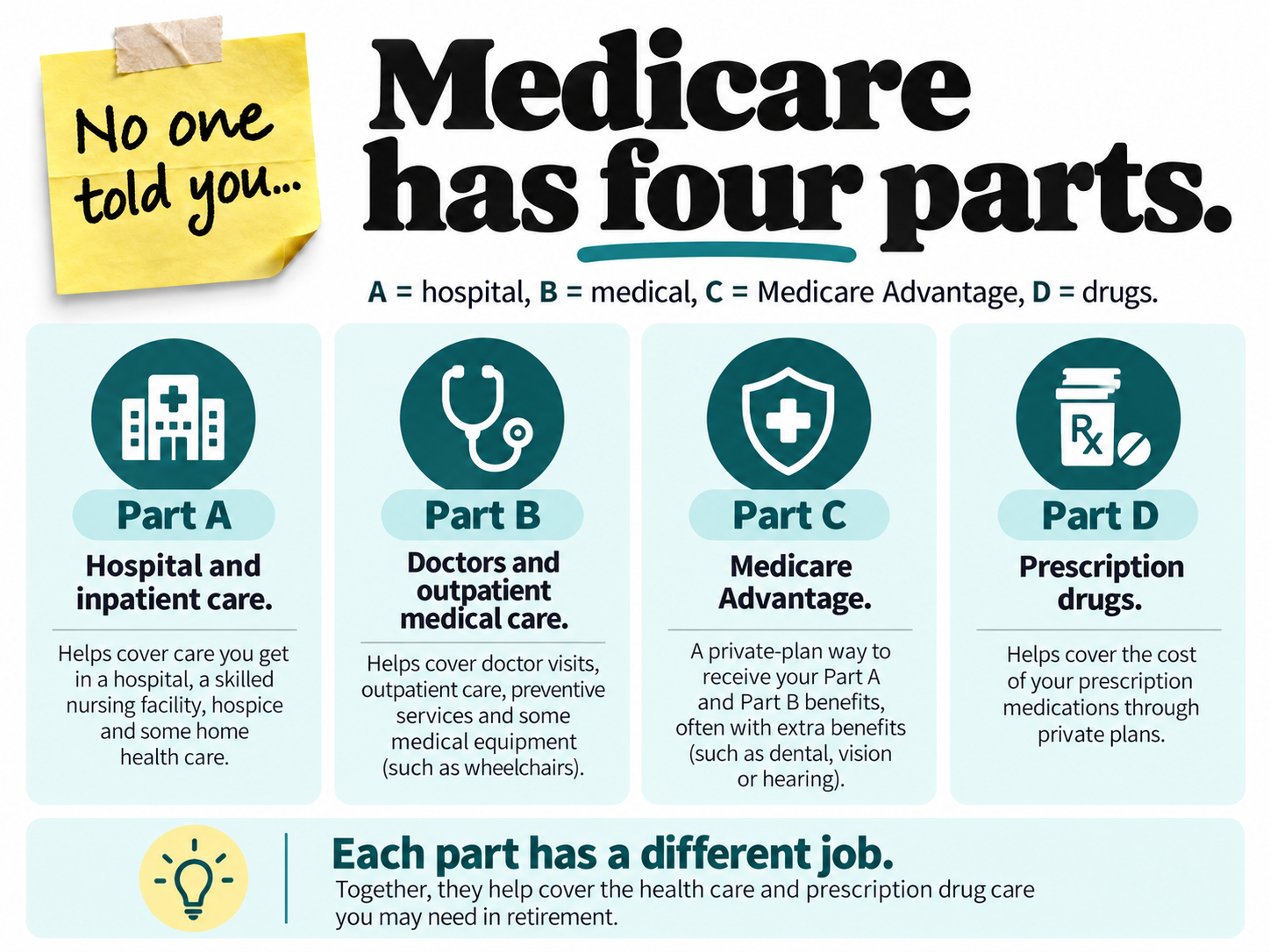
The easiest way to remember it
A = hospital
B = medical
C = Medicare Advantage
D = drugs
Part A
Part A helps cover things like:
- inpatient hospital stays
- certain skilled nursing care
- hospice
- some home health care
Most people pay no monthly Part A premium because they or a spouse paid Medicare taxes long enough while working.
Part B
Part B helps cover things like:
- doctors
- outpatient care
- preventive services
- medical equipment
- some home health care
Part B has a monthly premium.
Part D
Part D helps cover prescription drugs.
If you use Original Medicare, you can buy a separate Part D plan.
If you use Medicare Advantage, most plans already include Part D.
So what is Part C?
Part C is Medicare Advantage.
It is another way to receive Medicare.
You must have Part A and Part B to join Medicare Advantage.
Then a private Medicare-approved plan provides those benefits.
Most Medicare Advantage plans also include Part D.
Many offer extra benefits such as dental, vision or hearing.
Why are A, B and D separate, but C is different?
Because Medicare's naming system is not beginner-friendly.
Think of it this way:
A + B = core Medicare coverage
D = prescription-drug insurance
C = a private-plan way to package A + B, usually with D included
The bottom line
A = hospital
B = medical
C = Medicare Advantage
D = drugs
Learn the four letters first.
Then learn the signup and cost rules separately.